
Introduction
The phrase “World War 3” often sparks fear, curiosity, and intense debate. With rising geopolitical tensions, technological advancements in warfare, and shifting global alliances, many people wonder — are we heading toward another world war?
While no official global conflict exists today, understanding the possibilities, risks, and consequences is more important than ever.
What Would World War 3 Look Like?
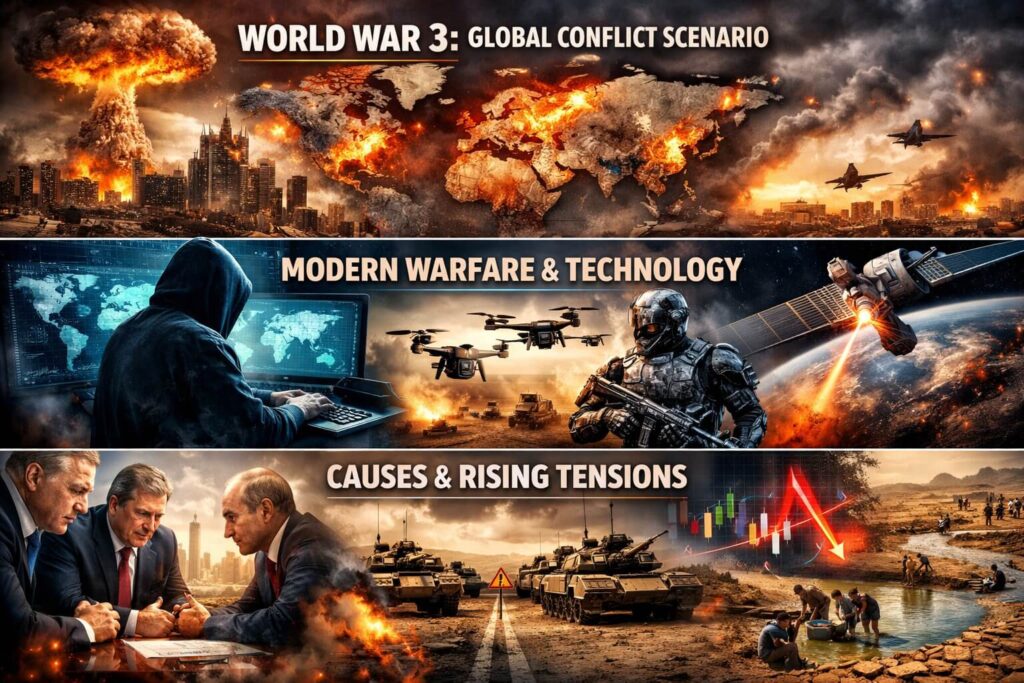
Unlike previous world wars, a third global conflict would not be limited to traditional battlefields. It would likely involve:
– Cyber warfare targeting financial systems, power grids, and communication networks
– Artificial Intelligence (AI) weapons capable of autonomous decision-making
– Space warfare, including satellite destruction
– Nuclear threats, which could escalate conflicts rapidly
Modern warfare would be faster, more unpredictable, and far more destructive.
Major Factors That Could Trigger WW3
1. Geopolitical Tensions: Ongoing conflicts and rivalries between major powers can escalate quickly.
2. Economic Conflicts: Trade wars, sanctions, and global economic instability can fuel hostility.
3. Technological Arms Race: Development of advanced weapons increases risk of miscalculation.
4. Resource Scarcity: Competition over water, energy, and food resources could trigger conflicts.
The Nuclear Threat
Even a limited nuclear exchange could destroy cities, cause environmental damage, and trigger nuclear winter.
The Role of Technology
– Drones and autonomous weapons
– Cyber attacks
– Information warfare and propaganda
Global Impact of WW3
– Massive loss of life
– Collapse of global economies
– Supply chain disruptions
– Refugee crises
Can World War 3 Be Prevented?
Diplomacy, economic interdependence, and nuclear deterrence play key roles in preventing global war.
Conclusion
World War 3 is not inevitable, but the risks are real. Global cooperation is essential to maintain peace.
Final Thought
History has shown us the cost of global conflict. The real challenge is ensuring we never repeat it.